









































E flute vs B flute is the first board choice most brands make when they order custom mailer boxes. Both are single-wall corrugated board, but E flute is about 1/16 inch thick and B flute is about 1/8 inch thick. That small gap changes print quality, crush resistance, box size and even shipping cost. I get this question almost every day, and the right answer depends on product weight, fragility and artwork. This guide compares flute thickness, strength, print surface and real use cases, so you can pick a board with numbers instead of guesses.
What Is the Difference in E Flute vs B Flute?
The main difference in E flute vs B flute is thickness: E flute is about 1.6 mm with 90 flutes per foot, and B flute is about 3.2 mm with 47 flutes per foot. E flute gives a smoother print surface and sharper corners. B flute gives more cushioning and better crush resistance.
The table below shows the core differences side by side.
| Feature | E flute | B flute |
|---|---|---|
| Thickness | About 1/16 in (1.6 mm) | About 1/8 in (3.2 mm) |
| Flutes per foot | 90 ± 4 | 47 ± 3 |
| Print surface | Very smooth, sharp detail | Good, ridges can show under dark solids |
| Crush resistance | Good for light products | Higher |
| Cushioning | Low | Medium |
| Corners and folds | Crisp | Slightly rounded |
| Typical product weight | Up to about 10 to 15 lb | About 20 to 30 lb |
These numbers follow the standard US flute chart. Product weight ranges are practical guidance for single-item mailer boxes, not a lab rating.
How Do Corrugated Flutes Work?
Corrugated board is a wavy paper layer, called the medium or flute, glued between two flat linerboards. The size and spacing of the waves set the board thickness, stiffness and cushioning. Tall, wide waves make thick board that absorbs impact. Small, tight waves make thin board with a flat surface.
What Are the Standard Flute Sizes?
There are 5 standard corrugated flute types in the USA, each with a set thickness and wave count.
| Flute | Flutes per foot | Thickness |
|---|---|---|
| A flute | 33 ± 3 | 3/16 in (4.8 mm) |
| C flute | 39 ± 3 | 5/32 in (4.0 mm) |
| B flute | 47 ± 3 | 1/8 in (3.2 mm) |
| E flute | 90 ± 4 | 1/16 in (1.6 mm) |
| F flute | 125 ± 4 | 1/32 in (0.8 mm) |
The letters follow the order the flutes were developed, not their size. I find this confuses a lot of first-time buyers, because B sits between C and E in thickness.
Which Board Prints Better?
In print quality, E flute vs B flute is an easy call: E flute prints better, because its 90 tight waves per foot create a flatter surface for ink. Logos, gradients, fine text and photos stay sharp on E flute corrugated board.
What Is Washboarding?
Washboarding is the faint striped pattern that appears when the flutes under the liner show through the print. It is most visible on B flute corrugated board with large blocks of dark solid color, such as full black or navy boxes. Light colors, patterns and kraft designs hide it well. When a brand sends me an all-black design, I always recommend E flute for this reason.
Which Board Is Stronger?
In strength, E flute vs B flute flips: B flute is stronger against crushing and impact, because its taller waves absorb more force at the box edges. Most shipping damage starts at the corners and edges, so this extra cushioning matters for heavy or fragile products.
Industry guidance shows that E flute above roughly 10 to 15 pounds starts to show panel deflection and corner crush in parcel networks. B flute handles about 20 to 30 pounds in a well-fitted mailer box.
How Do ECT and the Box Maker’s Certificate Fit In?
The edge crush test (ECT) measures how much force the board edge holds before it crushes, in pounds per inch. The Box Maker’s Certificate printed on a box bottom links each grade to a maximum box weight.
| Board | Rating | Box Maker’s Certificate weight limit |
|---|---|---|
| Single wall | 32 ECT | 40 lb |
| Single wall | 44 ECT | 65 lb |
| Double wall | 48 ECT | 80 lb |
Flute and ECT work together. A 32 ECT box can come in E flute or B flute, and the B flute version still cushions better. The limits apply to stacking and handling of the whole box, so a fragile product still needs an insert.
When Does E Flute Make More Sense?
E flute makes more sense for light to medium products where print quality and a slim, premium look matter most. It suits most direct-to-consumer brands.
There are 4 common cases for E flute corrugated mailer boxes:
- Cosmetics and skincare sets: crisp corners and sharp printing support a premium brand.
- Apparel and accessories: light weight, no crush risk, and a slim box that fits mail slots and lockers.
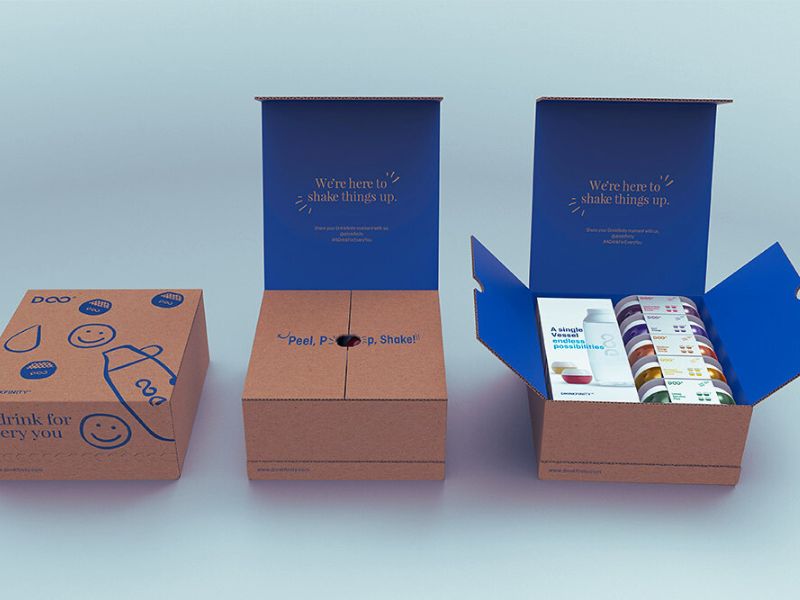
- Subscription boxes: full-color printing inside and out at a lower board thickness.
- Candles and glass with inserts: the die-cut insert protects the product, and E flute keeps the box sleek.
Our kraft mailer boxes and colored mailer boxes usually use E flute for these reasons.
When Does B Flute Make More Sense?
B flute makes more sense for heavy, fragile or multi-item orders that face rough handling. The extra 1.6 mm of board adds cushioning without the bulk of C flute.
There are 4 common cases for B flute corrugated mailer boxes:
- Heavy products: jars, bottles, tools and small appliances.
- Fragile items: ceramics, glassware and electronics, often with an insert.
- Multi-item kits: food boxes and snack boxes where items shift and press on the walls.
- Long routes: cross-country shipments and boxes stacked in a warehouse.
For these orders, I usually suggest our corrugated mailer boxes in B flute with a fitted insert.
Does the Flute Change Shipping Cost?
The flute changes shipping cost only a little, because box size drives dimensional weight far more than board thickness. UPS calculates dimensional weight as length x width x height in inches, divided by 139 for daily rates, and bills the higher of actual and dimensional weight.
B flute adds about 1.6 mm per wall compared with E flute. On a small box this rarely changes the bill. On a box right at a rounding point, the slimmer E flute keeps the outside size one step lower. The bigger saving comes from a box made to fit the product with about 1/8 inch clearance, which cuts empty space and void fill.
What About C Flute, F Flute and Double Wall?
C flute, F flute and double wall cover the jobs at each end of the E flute vs B flute range. Each one solves a different problem.
- F flute (0.8 mm): thinner than E flute, for small retail boxes that need more strength than paperboard.
- C flute (4.0 mm): the standard for plain brown shipping cartons with strong stacking strength. It is too thick for most printed mailers.
- Double wall (EB or BC): two fluted layers for heavy items, bulk orders and pallet stacking.
For heavy cartons, see our corrugated shipping boxes in single and double wall.
How Do You Choose Between E Flute vs B Flute?
To choose between E flute vs B flute, follow these 5 steps in order:
- Weigh the packed order. Start with E flute under about 10 lb, B flute from 10 to 25 lb, and double wall above that.
- Check fragility. Move up one grade or add an insert for glass, ceramics and electronics.
- Review the artwork. Choose E flute for dark solids, photos and fine text.
- Map the route. Choose B flute for long distances, rough handling and warehouse stacking.
- Test the box. Ship 3 to 5 boxes to different states before a full run.
I like the test step most, because a few test parcels reveal problems no spec sheet shows. The steps work best in this order, because weight and fragility rule out most options before design enters the decision.
Conclusion
E flute vs B flute comes down to weight, fragility and print. E flute corrugated board is about 1/16 inch thick, prints sharper and suits light mailer boxes. B flute corrugated board is about 1/8 inch thick and adds the crush resistance heavy or fragile orders need. Check the edge crush test rating, size the box to cut dimensional weight, and test a few parcels. I always start with the product weight, then pick the board.
FAQs
Is E flute or B flute stronger?
B flute is stronger against crushing and impact, because its taller flutes add cushioning. E flute is strong enough for most products under about 10 to 15 pounds and gives a better print surface.
How thick is E flute cardboard?
E flute cardboard is about 1/16 inch, or 1.6 mm, thick with roughly 90 flutes per foot. B flute is about 1/8 inch, or 3.2 mm, with roughly 47 flutes per foot.
Which flute is best for subscription boxes?
E flute is best for most subscription boxes, because kits are usually light and E flute prints sharply inside and out. Heavy food or drink kits suit B flute better.
Does B flute cost more than E flute?
B flute usually costs only slightly more than E flute at the same size. Box size, print coverage and finishes change the price far more than the flute grade.
Can E flute mailer boxes ship without an outer box?
Yes, E flute mailer boxes ship on their own through USPS, UPS and FedEx. Heavy or fragile items travel better in B flute or with an insert.